lunes, 21 de febrero de 2011

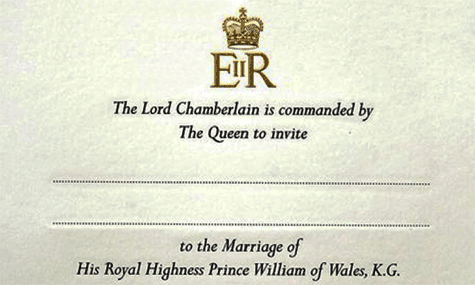
The wedding of Prince William and Catherine Middleton.


William's private life became the subject of tabloid speculation and gossip, especially around his relationship with Kate Middleton, who had been one of William's university flatmates and whom William began dating in 2003. Middleton attended the Prince's passing-out parade at Sandhurst, marking the first high-profile event that she attended as William's guest. The relationship between Prince William and Middleton was followed so closely that bookmakers took bets on the possibility of a Royal Wedding and the retail chain Woolworths produced memorabilia bearing the likenesses of the two.[56] Media attention became so intense that William had to make a specific request to the paparazzi that they keep their distance from Middleton and him. In March 2007, Middleton complained of media harassment by the Daily Mirror.[56] It was reported in April 2007 that the couple had split,[56][57] though in June, Middleton attended a party at Lulworth Army Barracks as the guest of Prince William,[58] in July she attended the Concert for Diana, which had been organised by Princes William and Harry.[59] in August, she accompanied William on holiday in the island of Des Roches in the Seychelles, and in October she joined Prince Charles and Prince Harry for a shooting party at Balmoral. In June 2008, along with the Royal Family, Middleton attended William's investiture into the Order of the Garter.
On 19 October 2010, on a trip to Kenya, the 28-year-old prince proposed to Middleton at Lewa game reserve, a favourite spot for Prince William.

Finally, they are going to marry on 2011.

This is the Henry VIII's family tree.
 

Henry VIII (28 June 1491 – 28 January 1547) was King of England from 21 April 1509 until his death. He was Lord of Ireland and claimant to the Kingdom of France. Henry was the second monarch of the House of Tudor, succeeding his father, Henry VII.
Besides his six marriages, Henry VIII is known for his role in the separation of the Church of England from the Roman catholic church.
Tudor London:

Tudor London can be described as a prosperous, bustling city during the Tudor dynasty. In fact, the population increased from 75,000 inhabitants with Henry VII to 200,000 at the end of the 16th century.
The Tudor monarchs had a royal residence in London called Whitehall Palace and another in the countryside,called Hampton court , after Cardinal Wolsey gave it to Henry VIII.These Tudor kings and queens used what are now famous parks , such as Hyde Park or St. James's Park , as Royal Hunting forests.
Not many Tudor buildings survive today, mostly because of The Great Fire , which happened in 1666. Besides, , the 13 religious houses in London were __ converted for private use or pulled down for building materials____ after the Dissolution of the monasteries, which was Henry VIII's most decisive step against the power of the church in 1538. First the small, less powerful houses had their property confiscated and their buildings blighted (made unsuitable for use). They were followed the next year by the large houses.
Philosophical concepts of the power of the king over church may have played a part in Henry's decision to suppress the monasteries, but so did greed. The monasteries were rich, and a lot of that wealth found its way directly or indirectly to the royal treasury. Some of the monastery buildings were sold to wealthy gentry for use as country estates. Many others became sources of cheap building materials for local inhabitants. One of the results of the Dissolution of the Monasteries is that those who bought the old monastic lands were inclined to support Henry in his break with Rome, purely from self interest.
Apart from that, the theatres were banned from the city by the city authorities or guilds because plays wasted workmen's time ( so it wasn't for religious objection to the play's contents ). Then, they were built in the Southwark, where now a reconstruction of the Globe can be visited to learn about Tudor theatre.
At that time, London's financial rival was the city of Amsterdam, and to be able to compete with it , an international exchange was created in 1566.
(It was founded by the mercer Thomas Gresham in 1566 to enable London to compete for financial power with Amsterdam. This became the Royal Exchange in 1560, and is now housed in a massive Victorian building beside the Bank of England Museum in Mansion House Square.)
So, all in all, and because of many other events and facts, we can say that both London and England were powerful.

lunes, 7 de febrero de 2011

1. The only son of the Montague family
Romeo

2. The only daughter of the Capulet family
Juliet

3. The governor of Verona
Prince Escalus

4. Juliet's cousin
Tybalt

5. Juliet's fiancé
Count Paris

6. The woman who looked after Juliet
The Nurse

7. Romeo's friend and teacher, a priest
Benvolio

8. Romeo's servant
Abram and Balthasar

9.The friar who had to go to Mantua
Friar Laurence

10.The queen of the fairies, of the dreams
An Apothecary

Barcelona - London

If you want to fly from Barcelona to London at 8th February of 2011 it cost 93,99€ and the flight lasts two hours and twenty minuts.
Once you're there you can take a taxi, a bus or go on foot.
The Globe Theatre is very near to a subway station so you can just catch the subway and then walk to the theatre. Some hotels near the Globe are Premier In London Southwark or Mercure London Bankside.


lunes, 22 de noviembre de 2010


1. Whereabout in London were the Theatres located ? Why ?
In the " Liberties ", outside the City walls and on the south bank of the river , called Southwark.Because the City Council ( guilds) together with the Puritans did not approve of the playhouses.
2. Name the most important theatres during Elizabethan times.
Fortune , Globe , Hope, Red Bull , Rose, Swan , Theatre & the
Whitefriars Theatre
3. Which was the first playhouse in London ? Who built it ?
The Theatre was the first public playhouse of London, located in the parish of St. Leonard's, Shoreditch. It was designed and built by James Burbage (the father of actor Richard Burbage). 
4. When was it built ? When was it closed ?
The Theatre was a roofless, circular building with three galleries surrounding a yard. It opened in 1576, and several companies performed there, including Leicester's Men (1576-78), the Admiral's Men (1590-91), and Chamberlain's Men (1594-96), who were associated with William Shakespeare. The Theatre also housed fencing and athletic competitions. After the death of James Burbage in February 1597, the theatre's lease ended. In 1598 the building was dismantled, and Burbage's sons, Cuthbert and Richard, used its timbers to construct the first Globe Theatre.
5. Describe the particular shape of the theatres . Where did they take this shape from ?
The theatres were circular, open-air buildings, surrounded an open yard (like the Inn-Yards) with the stage at one end, jutting out into the audience to about half the depth of the theatre; the width was considerably more. Round three sides of the yard were three tiers of galleries where the wealthier or superior members of the audience sat; the rest of the audience stood in the open yard around the stage and (for obvious reasons) they were known as 'the Groundlings'.
6. Who controlled the performances on behalf of the government?
The person who controlled the performances of plays on behalf of the government was the Master of Revels.In the 1590s this was a man called Edmund Tilney.
7. Why could the theatres be closed down ?
Playhouses could be closed for many reasons, among them outbreaks of the plague, sedition and immorality, which would certainly have included women appearing on stage.
8. Who played the parts of women on stage ? Why ?
Young men , as it was thought immoral for women to act in plays , even to attend the playhouses.
9. Did women attend the theatre?
Yes, women did attend the theatre although this was not formally approved of. In fact, every level of society went to the plays including apprentices, law students, craftsmen, pickpockets, ballad sellers, merchants and nobility.
Even legend says Queen Elizabeth attended the Globe secretly some times.
10. How much did it cost to stand in the yard ? And to sit in a gallery ? And to have a cushion ?And to sit in the lords’ room ?
It cost one penny to stand in the yard of the playhouse and a further penny for a seat in one of the covered galleries. A cushion to make watching the play more comfortable cost a further penny and a seat in the Lords' room cost approximately sixpence.
To stand in the yard - One penny
To sit in the gallery - Two pennies
To have a cushion - Three pennies
To sit in the Lords' room - Sixpence
lunes, 8 de noviembre de 2010

lunes, 25 de octubre de 2010

voki


Get a Voki now!
1. Surname of William Shakespeare's wife: Hathaway
2. The most cruel and bloody of Will's tragedies: Titus
3. Queen of England during most of Will's life: Elisabeth
4. Tragedy set in the Roman Empire: Julius Caesar
5. Name of the book which collected Will's plays: Firts folio
6. Will's only son: Hamnet
7. Will's mother: Mary Arden
8. Will's hometown: Stratford
9. Name of Will's rival poet: Christopher
10.Founder of the Theatre: Burbage
11.One of Will's most famous tragedies, in which a king has three daughters: Kinglear
12.A famous theatre close to the Globe: Rose
13.Will's first daughter: Susanna
14.Hamlet's unfortunate girlfriend: Ophelia
15.Will's theatre: Globe
16.One of Will's famous tragedy . " Out damn spot. Out, I say !": Macbeth
17.Tragedy and name of the king who said " A horse. My kingdom for a horse !": Richard
18.Tragedy and name of a man who killed his wife Desdemona for jealousy: Otello

viernes, 22 de octubre de 2010

What do you now about Shakespeare?

0. When was William Shakespeare born ? Where ?
He was born in April, 1564 in Stratford-upon-Avon, Warwickshire, about 100 miles northwest of London.  

1. Write the names of William Shakespeare’s parents . Who were they ?
 Shakespeare's parents were John and Mary Shakespeare. John was a whittawer and Mary was an english aristocrat.

2. Write the name of his wife . When did they get married ?
 On November of 1582 with Ann Hathwey.

3. Write the names of his three children. What happened to them ?
 Susanna, Hamnet and Judith Shakespeare. Hamnet and Judith were tweens, but Hamnet died when he was eleven.

4. What was the name of his hometown ?
 Stratford-upon-Avon, Warwickshire

5. Write the names of the buildings in his hometown related to him .
 Royal Shakespeare Theatre, Hall's Croft New Place, Anne Hathaway's Cottage, Mary Arden's House, and others

6. Where did he study ?
 William Shakespeare attended Kings New School in Stratford-upon-Avon, where he would have studied Latin Grammar and Classics.

7. Did he go to university ?
Shakespeare did not go to university

8. Why did he leave his family and hometown to go to London ?
To became a good whriter

9. How many plays had he written when he arrived in London ?
Thirty

10.When can we find the first reference to Shakespeare in the literary world of London ? 
 In 1592, when a fellow dramatist,  wrote about Shakespeare in a pamphlet written on his deathbed.

11. When he was in London , he was an actor and playwritght who belonged to the company called Lord Chamberlain's Men (called the King's Men after the accession of James I in 1603), which had been founded by Lord Chamberlain and whose theatre was called The Globe .They had the bast actor Richard Burbage and the best dramatist , William Shakespeare.

 12. When and where did he die ?
He died on April 23, 1616 in Stratford-upon- Avon

13. When and where did his wife die ?
Anne died in 1623, seven years after Shakespeare.

14. Where is he buried ?
In the chancel of the parish church of Stratford-upon-Avon. No name was inscribed on his gravestone . Instead these lines, possibly his own, appeared:
Good friend, for Jesus' sake forbear
To dig the dust enclosed here.
Blest be the man that spares these stones,And curst be he that moves my bones. 

15. What did his will state ?
Shakespeare's will (made on March 25, 1616) is a long and detailed document. It entailed his quite ample property on the male heirs of his elder daughter, Susanna.
As an afterthought, he bequeathed his "second-best bed" to his wife; but no one can be certain what this notorious legacy means.
The testator's signatures to the will are apparently in a shaky hand. Perhaps Shakespeare was already ill.

miércoles, 22 de septiembre de 2010

Hello! I'm Jordina. This is my blog and it talks about Shakespeare. It's an activity from my schol. I hope yoou like it.